Zoom and pan to explore details
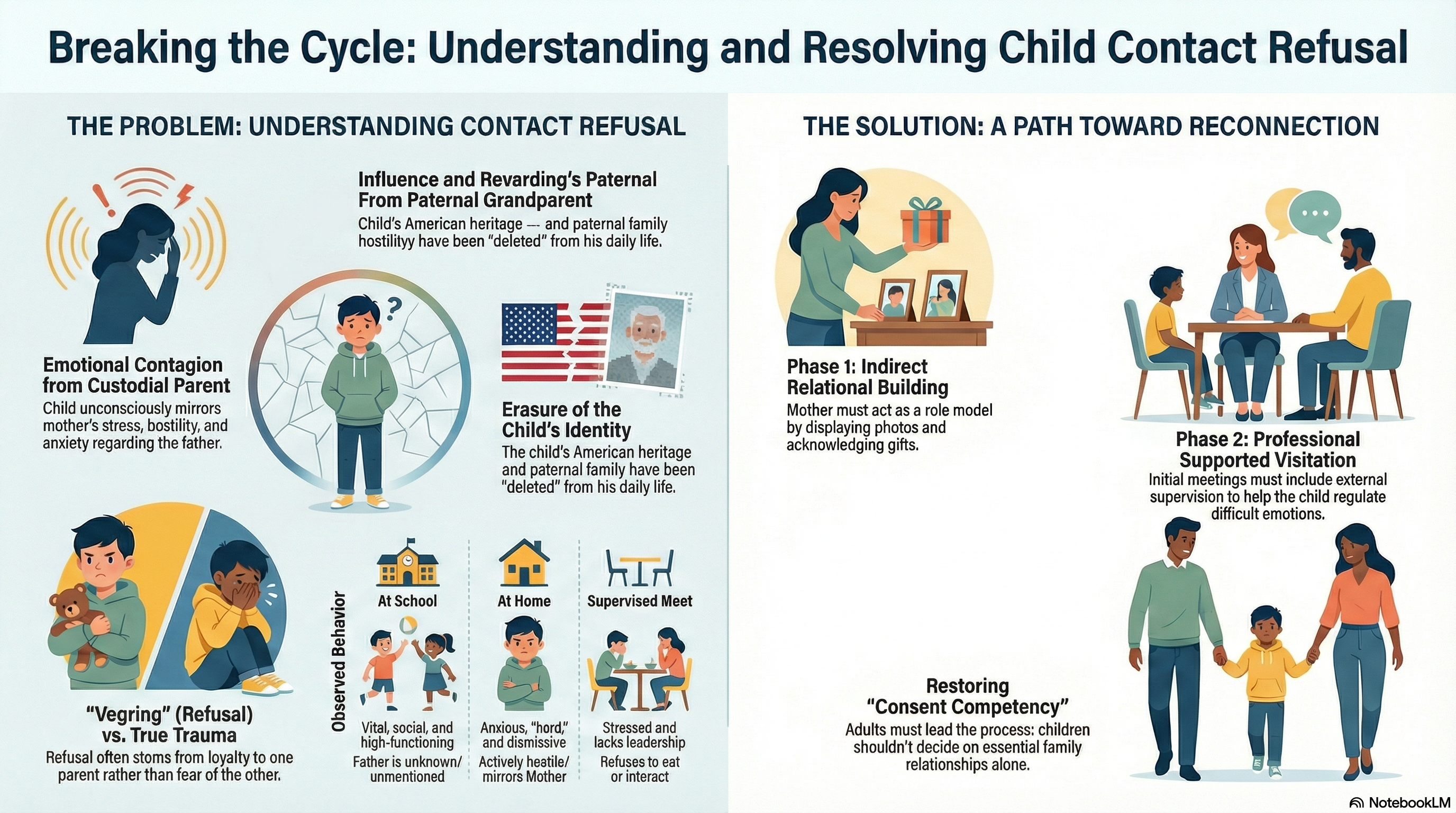
This infographic provides a systematic framework for understanding and resolving child contact refusal in high-conflict separation and divorce cases. It distinguishes between coached rejection ("refusing") and authentic preference ("veering"), while offering a phased clinical pathway to rebuild fractured parent-child relationships. The model addresses the psychological mechanisms behind contact resistance—including emotional contagion from the custodial parent, mirroring of hostility, and identity erasure—and outlines evidence-based interventions to restore healthy family bonds.
The child absorbs the custodial parent's stress, hostility, and anxiety regarding the other parent. This creates a "contagion effect" where the child mirrors the mother's emotions, adopting her negative narrative about the father without independent verification.
"Refusing" occurs when a child parrots the custodial parent's statements verbatim, showing coached rejection. In contrast, "veering" reflects genuine developmental preference. Refusal often stems from loyalty conflicts rather than actual fear or harm.
Children in high-conflict situations often experience identity erasure, where one parent's heritage, values, or narrative is systematically "deleted" from the child's self-concept. For example, an American-Norwegian child being taught to identify as "100% Norwegian" while rejecting the American parent.
A critical diagnostic criterion: Does the child function normally in other environments (school, peers, extracurriculars)? If so, the rejection is relationship-specific, not a global developmental issue—indicating that therapeutic intervention, not continued separation, is the appropriate response.
The framework proposes a three-phase therapeutic model to restore parent-child relationships while protecting the child from harm:
Begin with low-threat, asynchronous contact: letters, photos, video messages. This allows the child to engage at their own pace without performance pressure, gradually normalizing the rejected parent's presence.
Introduce supervised visits in neutral settings with therapeutic oversight. Using grandparents as a "safe bridge" can reduce defensiveness—children are often less resistant to extended family than the rejected parent directly.
Gradually transition to autonomous contact while maintaining therapeutic monitoring. The goal is for the child to internalize a balanced narrative about both parents, freeing them from loyalty conflicts and allowing authentic relationship-building.

Comments (0)
Please log in to post comments.